Nvidia RTX Spark: Inside the Chip That Could End x86's Laptop Reign
Nvidia Is Now a PC Chip Company
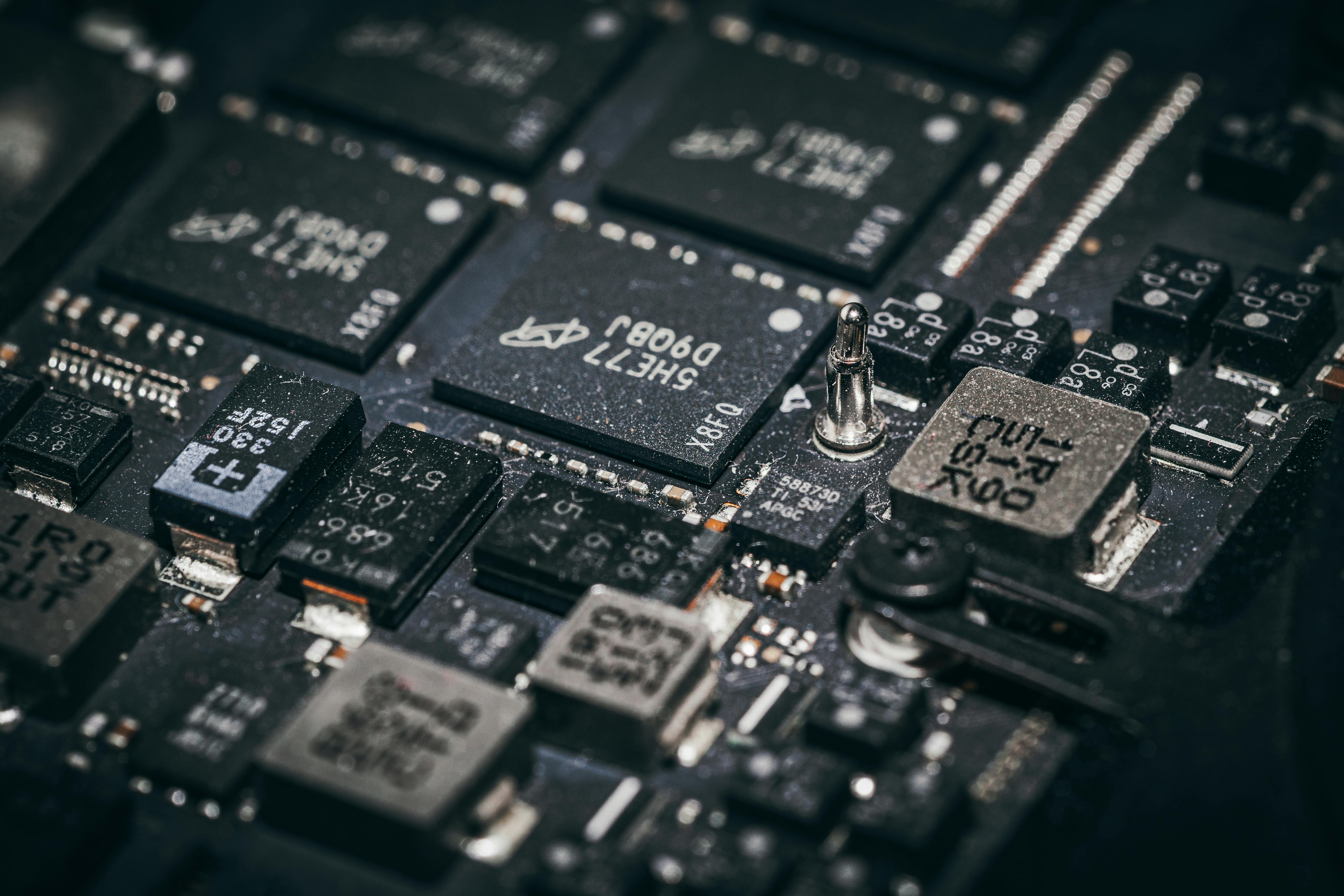
Nvidia announced RTX Spark at Computex 2026 — a complete ARM-based system-on-chip for Windows laptops and compact desktops, built around a 20-core ARM CPU and a 6,144-CUDA-core Blackwell GPU with up to 128 GB of unified memory. This is not a discrete GPU plugged into someone else’s processor. It is Nvidia’s first bid for the chip seat that Apple has owned in premium laptops since 2020.
The announcement came from Jensen Huang at GTC Taipei on May 31. Eight PC brands — including Dell, Lenovo, and Microsoft — have committed to shipping RTX Spark devices this fall.
The RTX Spark Architecture: GB10 Meets the Mainstream
The chip comes in two variants: the N1 and the higher-performance N1X. Both integrate CPU, GPU, and memory on a single die. The GPU side leads the spec sheet — 6,144 Blackwell CUDA cores puts RTX Spark in mobile RTX 5070 territory, well beyond what any integrated GPU from Intel or Qualcomm delivers today.
The silicon is not new. RTX Spark is based on the GB10 die — the same chip inside the DGX Spark, Nvidia’s $3,000 personal AI supercomputer. What changes is the packaging: Nvidia co-developed the platform with MediaTek to meet the thermal and power constraints of a thin laptop chassis. Repurposing proven silicon rather than designing something from scratch is pragmatic; it also means the GB10’s AI performance characteristics are already well-documented from the DGX Spark launch.
The 20-core ARM CPU is the part that deserves more scrutiny than it has received. Nvidia has spent 33 years building GPUs. Competitive application-processor cores — the kind that handle compile times, browser workloads, and interactive developer tooling — are a different engineering discipline. We will reserve judgment on that half of the chip until independent benchmarks arrive against Apple’s M4 and Qualcomm’s Snapdragon X Elite.
128 GB Unified Memory Changes the Local AI Equation
The architecture choice that most directly affects developers is the memory ceiling. Apple’s M4 Max tops out at 128 GB. Snapdragon X Elite caps at 64 GB. Most x86 laptop discrete GPUs ship with 8–16 GB of VRAM that cannot be shared with the CPU at all.
RTX Spark’s 128 GB unified pool, shared between CPU and Blackwell GPU, means you can load a 70B-parameter model fully into memory without quantization — and run inference at useful latency. For teams building AI-native features, that matters: the gap between what runs in a cloud test harness and what you can iterate on locally narrows considerably.
Nvidia claims 1 petaflop of AI compute — 1,000 TOPS. That is roughly in the range of what Apple claims for M4 Pro when combining GPU and Neural Engine throughput, and it positions RTX Spark in “run serious models locally” territory rather than the token Copilot-button category most AI PCs have occupied.
Adobe has already committed to optimizing Photoshop and Premiere for RTX Spark. That kind of ISV attention is the signal that matters: professional software vendors writing for specific silicon again, the way they did for PowerPC in the 1990s, is how a chip becomes a platform.
Microsoft Bets Its Flagship on Nvidia
The most strategically significant move in the announcement is where Microsoft placed RTX Spark. The Surface Laptop Ultra — described as the “most powerful Surface ever,” a 15-inch device — will ship on RTX Spark this fall. Microsoft choosing Nvidia silicon over Intel or Qualcomm for its flagship is a directional statement about where Windows hardware is heading.
Microsoft and Nvidia are jointly framing the platform around “agentic AI” — persistent software agents that run locally without cloud round-trips. Whether that use case generates real revenue in the near term is an open question. The underlying infrastructure bet — local inference over cloud dependency for latency-sensitive and privacy-sensitive workloads — is one we think is strategically correct, regardless of whether “AI agents” land as a consumer category in the next 12 months.
What This Means for the Products We Ship
At Dracode we build mobile and AI-native products for founders and scale-ups, so a laptop chip platform might seem adjacent to our work. It is not, for two reasons.
First, developer experience. A machine with 128 GB of unified memory and a Blackwell GPU changes what is feasible to run locally — code generation, diffusion-based design iteration, and local inference for testing AI features without burning API budget on every experiment. We want this machine in our workflow.
Second, the products we build for clients. On-device AI inference has been an Apple Silicon story for the last four years. RTX Spark starts to erode that assumption. If you are designing an enterprise or consumer app with AI features today, the premise that local inference is a premium capability limited to Mac users will be wrong within 18 months. That changes the product roadmap conversation — talk to us if you are working through where on-device AI fits in what you are building next.
Sources
- Nvidia announces RTX Spark as ‘the most efficient PC chip ever built’ — The Verge, June 1 2026
- This is the Microsoft Surface Laptop Ultra with Nvidia RTX Spark — The Verge, June 1 2026
- Eight PC brands commit to Nvidia-MediaTek RTX Spark as AI agent laptops take shape for fall — Digitimes, June 1 2026
- Nvidia enters windows laptop market, taking on Intel and AMD — Bloomberg, June 1 2026
- NVIDIA’s RTX Spark is an AI “superchip” that will power Windows laptops and desktops — Slashdot, June 1 2026